Tropical rainforest canopy aerial view
🌎 Independent Travel Resource

Explore Costa Rica's
Most Remarkable Natural Wonders

Your comprehensive, independent guide to visiting the national parks, volcanic landscapes, cloud forests, and pristine coastlines of one of the world's most biodiverse countries.

📝 10+ In-Depth Articles 🗺️ Regional Guides 📅 Seasonal Planner
Download Free Visitor Guide

A Global Biodiversity Hotspot

Costa Rica is one of the most biologically diverse countries on Earth. Despite covering only 0.03% of the planet's surface, it harbors nearly 6% of the world's species. The country's network of protected areas — managed by the Sistema Nacional de Áreas de Conservación — preserves everything from active volcanic craters to pristine coral reefs.

29
National Parks
27%
Protected Territory
500K+
Species Documented
12
Climate Zones

In-Depth Park & Wildlife Guides

Volcanic crater lake with turquoise water Volcanic Landscapes
📖 8 min readMarch 2026

The Complete Guide to Costa Rica's Active Volcanoes

Costa Rica sits along the "Ring of Fire," home to over 200 volcanic formations — five of which are considered active. From iconic crater lakes to steaming fumaroles, the volcanic landscape offers some of the most dramatic scenery in Central America.

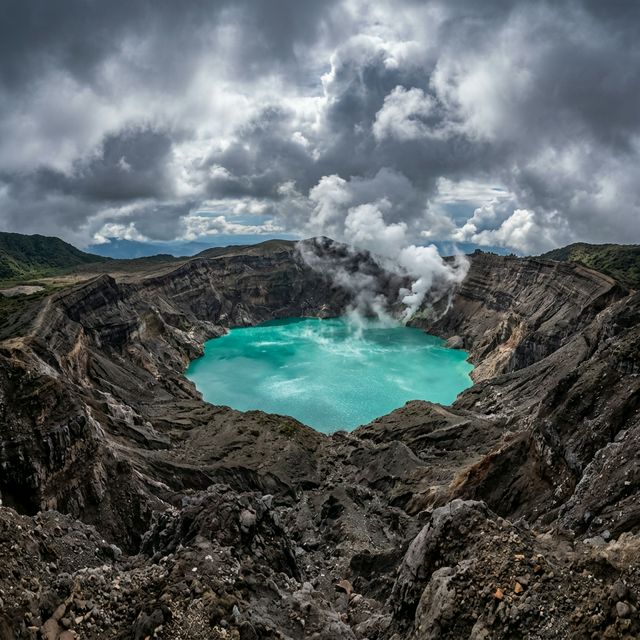
The Central Volcanic Range is home to some of the most accessible volcanic experiences in the Americas. Poás Volcano features one of the widest craters in the world, measuring nearly 1.5 kilometers across. Its crater lake fluctuates in color from turquoise to gray depending on volcanic gases. Visitors can observe this marvel from a paved viewpoint just a short walk from the entrance.

Irazú Volcano claims the title of Costa Rica's tallest volcano at 3,432 meters. On a clear day — most common during the dry season (December through April) — visitors standing at its summit can see both the Pacific and Caribbean coastlines simultaneously. The crater lake, known for its striking green color, is a photographer's dream.

Arenal Volcano, though no longer erupting since 2010, remains one of the country's most iconic landmarks. Its near-perfect conical shape rises dramatically above the surrounding lowlands. The old lava trails that wind through the national park provide hiking opportunities among cooled volcanic rock formations, now overtaken by pioneer plant species in a fascinating display of ecological succession.

For safety, all volcanic parks maintain monitoring stations operated by OVSICORI (the Volcanological and Seismological Observatory of Costa Rica). Visitors should check current conditions before visiting, as closures due to elevated volcanic activity occur periodically, particularly at Poás and Turrialba.

Tropical beach with turquoise water Coastal & Marine
📖 7 min readMarch 2026

Costa Rica's Best Coastal Parks: Where Jungle Meets the Sea

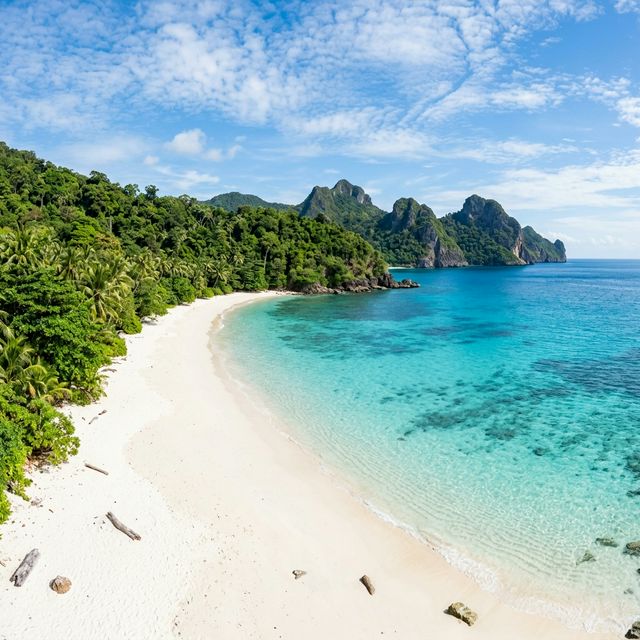
With coastlines on both the Pacific Ocean and Caribbean Sea, Costa Rica offers astonishing marine and coastal diversity. From vibrant coral reefs to protected nesting beaches for endangered sea turtles, the country's coastal parks are ecological treasures.

Manuel Antonio National Park, despite being one of the smallest protected areas in the country, consistently ranks among the most visited. Its compact size is deceptive — the park shelters over 109 mammal species and 184 bird species within just 16 square kilometers. Three gorgeous beaches within the park boundaries provide safe swimming alongside wildlife viewing, where squirrel monkeys and white-faced capuchins are commonly seen in the trees overhead.

On the Caribbean side, Cahuita National Park protects one of the most important coral reef systems in Costa Rica. The reef stretches over 600 hectares and supports an extraordinary diversity of marine life, including brain coral colonies, sea fans, and over 120 species of tropical fish. Snorkeling conditions are best from February to April and September to October, when water visibility is clearest.

The remote Marino Ballena National Park along the southern Pacific coast is named for the humpback whale tail shape of its famous tombolo (a sandy point that connects to a rocky island). Humpback whales from both the Northern and Southern hemispheres migrate here, making it one of the few places where you can observe these magnificent creatures nearly year-round — from January to March and July to November.

Dense tropical rainforest trail Rainforests
📖 9 min readMarch 2026

Exploring the Primary Rainforests of Costa Rica

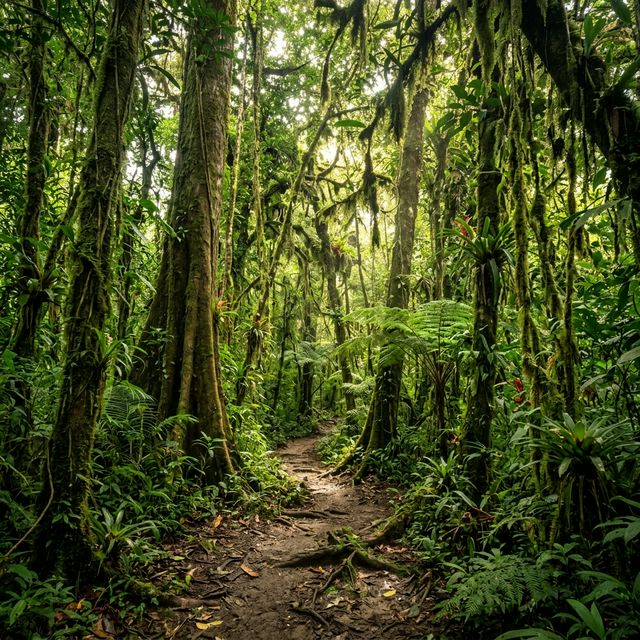
Costa Rica's primary rainforests are among the most complex ecosystems on Earth. With up to 400 tree species per hectare, these ancient forests harbor a web of ecological relationships that scientists are still working to fully understand.

Corcovado National Park on the Osa Peninsula is widely regarded as the crown jewel of Costa Rica's protected areas. National Geographic once called it "the most biologically intense place on Earth." The park protects the largest remaining tract of Pacific lowland tropical rainforest in Central America. Within its boundaries, all four Costa Rican monkey species coexist, along with tapirs, jaguars, peccaries, and an astounding diversity of bird life including scarlet macaws.

Visiting Corcovado requires advance planning. Entry is permitted only with a certified guide, and the number of daily visitors is strictly limited. The most popular routes include the Sirena Station trail from Carate and the coastal path from Drake Bay. Multi-day treks are available for those seeking a deeper wilderness immersion, with basic ranger station accommodations available upon reservation.

Tortuguero National Park in the northeast represents a very different rainforest experience. Accessible only by boat or small aircraft, this lowland Atlantic forest is crisscrossed by a network of navigable waterways. Boat tours through the canals offer sightings of caimans, river otters, howler monkeys, toucans, and countless herons. During nesting season (July through October), the park's beaches serve as one of the Western Hemisphere's most important nesting sites for green sea turtles.

Braulio Carrillo National Park, remarkably close to San José, protects a vast tract of cloud forest along the mountainous spine of the central volcanic range. The park receives over 4,500 millimeters of rain annually, supporting an extraordinarily lush canopy. The aerial tram that borders the park offers a unique perspective, gliding through the forest canopy at treetop level.
Cloud forest aerial view Cloud Forests
📖 6 min readMarch 2026

Cloud Forests: The Mystical Highlands of Central America

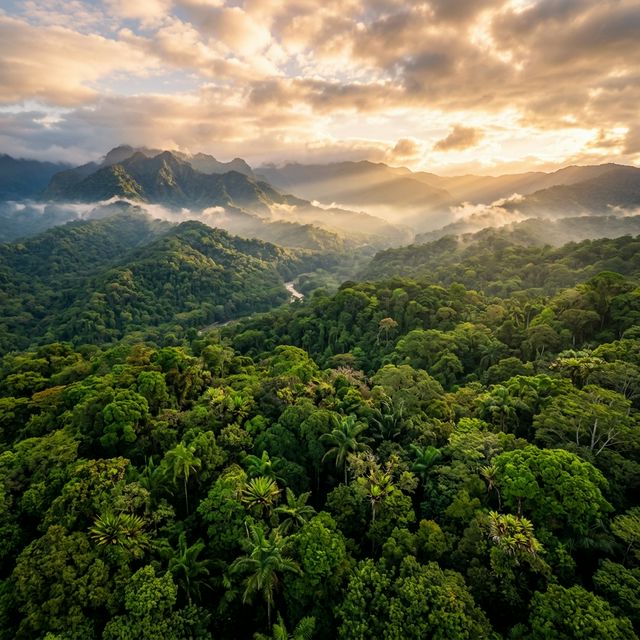
Perched between 1,500 and 2,500 meters, cloud forests are among the rarest and most endangered ecosystems on Earth. Costa Rica's montane forests are perpetually draped in mist, creating ethereal landscapes where every surface drips with mosses, ferns, bromeliads, and orchids.

The Monteverde and Santa Elena Cloud Forest Reserves are the most famous of Costa Rica's highland forests. Together they protect over 10,500 hectares of primary cloud forest and host an incredible array of life — over 100 mammal species, 400 bird species, 120 reptile and amphibian species, and more than 2,500 plant species, including one of the world's richest concentrations of orchids.

The iconic resplendent quetzal, considered one of the most beautiful birds in the Americas, finds its stronghold in these montane forests. Males sport iridescent green plumage with crimson chests and elongated tail feathers that can exceed 60 centimeters. Quetzal sightings are most reliable from January to May during breeding season when they frequent wild avocado trees.

Chirripó National Park protects a very different kind of highland ecosystem — the páramo. Above 3,000 meters, the forest gives way to open grasslands studded with gnarled oak trees and giant St. John's Wort plants. The summit hike to Cerro Chirripó (3,820 meters) is Costa Rica's most challenging multi-day trek, rewarding those who complete it with panoramic views of both oceans on clear mornings.

Marine wildlife habitat Wildlife
📖 7 min readMarch 2026

Wildlife Watching: When and Where to See Costa Rica's Most Iconic Species

From scarlet macaws and quetzals to sloths and sea turtles, Costa Rica's wildlife diversity is staggering. With the right timing and location, visitors can encounter some of Central America's most iconic species in their natural habitats.

Scarlet Macaws: Once nearly extinct in much of their former range, scarlet macaws have made an impressive comeback in Costa Rica. The Osa Peninsula and Carara National Park are the best places to spot these brilliant crimson, blue, and yellow parrots. Early mornings and late afternoons offer the best viewing as flocks fly between roosting and feeding areas.

Three-toed Sloths: These gentle, slow-moving mammals are found throughout Costa Rica's lowland and mid-elevation forests. Manuel Antonio, Cahuita, and Tortuguero provide excellent viewing opportunities. Sloths spend up to 20 hours per day sleeping in the canopy, making them surprisingly difficult to spot without an experienced guide.

Sea Turtles: Four species of sea turtle nest on Costa Rica's beaches. Tortuguero is the primary nesting ground for green turtles (July–October), while Ostional hosts the spectacular "arribada" mass nesting events of olive ridley turtles year-round. Leatherback turtles, the world's largest, nest primarily on Pacific beaches from October to March.

Poison Dart Frogs: These tiny, brilliantly colored amphibians are most easily seen in the Caribbean lowlands. The strawberry poison dart frog, with its vivid red body and blue legs, is particularly common in areas around Cahuita and Tortuguero during the rainy season.

Geothermal activity Geothermal
📖 5 min readMarch 2026

Hot Springs and Geothermal Wonders of the Volcanic Highlands

Costa Rica's volcanic activity doesn't just create dramatic craters — it also heats underground aquifers that surface as natural hot springs. From rustic forest pools to developed thermal resorts, the country offers a range of geothermal bathing experiences.

The Arenal-Fortuna region is the epicenter of hot spring activity in Costa Rica. Heated by the deep magma chambers of Arenal Volcano, dozens of thermal springs emerge along the volcano's northern flanks. Temperatures range from a comfortable 32°C to a scalding 65°C at their sources. The mineral-rich waters contain dissolved silica, calcium, magnesium, and trace elements that many visitors find soothing for joints and skin.

Rincón de la Vieja National Park offers a more primitive geothermal experience. The volcanic mud pots, or "pilas de barro," bubble and spit gray mud from the Earth's interior. Sulfurous fumaroles emit steam that can reach temperatures above 100°C, creating an otherworldly landscape. The park's Las Pailas trail offers a safe, well-maintained route past the most impressive geothermal features.

For visitors seeking a more off-the-beaten-path experience, the hot springs near the Miravalles Volcano in Guanacaste provide a quieter alternative. The Costa Rican Electricity Institute (ICE) operates a geothermal power plant here, and natural hot springs emerge from the surrounding forest floor in a peaceful woodland setting.

Forest canopy view Adventure
📖 6 min readMarch 2026

Hiking Costa Rica: From Beginner Trails to Multi-Day Expeditions

Whether you're seeking a gentle walk through a nature reserve or a challenging multi-day summit attempt, Costa Rica offers hiking experiences for every level. The country's compact size means diverse ecosystems are accessible within short distances.

Beginner-Friendly Trails: Manuel Antonio's network of short, well-maintained trails offers easy walking through coastal forest with frequent wildlife sightings. The Arenal Hanging Bridges provide elevated canopy walks without strenuous climbing. Cahuita's coastal trail follows the beach for several kilometers, combining gentle walking with swimming opportunities.

Intermediate Hikes: The Sendero Los Quetzales between Cerro de la Muerte and Boquete traverses prime cloud forest at altitudes between 2,000 and 3,000 meters. Rincón de la Vieja's trail system offers day-hike options including a waterfall loop and geothermal circuit, each requiring 3-5 hours of moderate exertion.

Advanced Expeditions: Mount Chirripó (3,820m) is the ultimate Costa Rican hiking challenge. The standard route from San Gerardo de Rivas to Crestones Base Camp covers 14.5 kilometers with over 2,400 meters of elevation gain. Most hikers complete the ascent over two days, summiting for sunrise on the second morning. Permits must be reserved months in advance through the SINAC reservation system.

Aerial forest view Conservation
📖 6 min readMarch 2026

Costa Rica's Conservation Success Story: A Model for the World

Once facing severe deforestation, Costa Rica reversed course in the 1990s and now leads the world in sustainable environmental policies. The country's "Payment for Environmental Services" program has restored forest cover from 21% in 1987 to over 52% today.

Costa Rica's environmental transformation is one of the most remarkable conservation stories of the modern era. In the 1980s, the country had one of the highest deforestation rates in the world. However, through visionary policies — including banning open-pit mining, eliminating deforestation subsidies, and implementing the pioneering "Pagos por Servicios Ambientales" (Payments for Environmental Services) program — the country dramatically reversed its forest loss.

The Payment for Environmental Services program compensates landowners for maintaining forest cover on their properties, recognizing the value of ecosystem services such as carbon sequestration, water purification, biodiversity protection, and scenic beauty. Since its inception in 1997, the program has channeled over $500 million toward forest conservation and reforestation.

Costa Rica has set an ambitious target to achieve carbon neutrality, becoming one of the first countries to formally pursue this goal. Nearly 98% of the country's electricity already comes from renewable sources — primarily hydroelectric, wind, geothermal, and solar. The national bus fleet is transitioning to electric vehicles, and new legislation restricts single-use plastics in protected areas.

Costa Rica coastline Bird Watching
📖 7 min readMarch 2026

Birding in Costa Rica: 900+ Species in a Country Smaller Than West Virginia

Costa Rica is a birding paradise. Over 900 species — more than all of North America combined — have been recorded in this small country. From the resplendent quetzal to the keel-billed toucan, the avian diversity is staggering.

The country's extraordinary bird diversity results from its position between two continents and two oceans, combined with extreme topographic variation that creates distinct habitat zones from sea level to over 3,800 meters. Migratory species from both North and South America pass through or winter in Costa Rica, adding to an already impressive resident species list.

Top Birding Hotspots: The Savegre Valley near San Gerardo de Dota is the most reliable location for quetzal sightings. La Selva Biological Station in the Caribbean lowlands has recorded over 400 species within its boundaries. Carara National Park, located at the transition zone between dry and wet forests, offers unusual diversity including scarlet macaw flocks. The Wilson Botanical Garden near San Vito attracts highland species in a beautifully maintained setting.

For serious listers, Costa Rica's eBird hotspot data shows that a well-planned two-week itinerary covering lowland, mid-elevation, and highland habitats can yield 300-400 species. The optimal birding window is December through March, when resident species are most vocal and North American migrants are present.

Volcanic landscape Practical Guide
📖 8 min readMarch 2026

Planning Your Costa Rica Nature Trip: Everything You Need to Know

From entry requirements and transportation to packing lists and health precautions, this comprehensive guide covers all the practical details for planning a successful Costa Rica nature trip. Based on current 2026 regulations and conditions.

Entry Requirements: Most visitors from North America, Europe, and many other countries can enter Costa Rica visa-free for stays up to 90 days. A valid passport with at least 6 months remaining validity is required. Proof of onward travel (return flight or continuation ticket) may be requested at immigration.

Getting Around: Renting a 4x4 vehicle is the most flexible way to explore the country, especially for reaching remote parks. Roads to national parks vary widely in quality — routes to Poás and Irazú are well-paved, while accessing Corcovado or Tortuguero requires boat transport. Domestic flights (Sansa Airlines, Green Airways) connect major tourist hubs and save significant driving time.

When to Visit: The dry season (December–April) offers the most predictable weather for hiking and wildlife viewing. However, the "green season" (May–November) has advantages: lower prices, fewer crowds, lush landscapes, and excellent sea turtle nesting. Many experienced travelers consider September–October the best compromise — nesting season for turtles, whale watching season, and still reasonably dry on the Pacific coast.

Health Precautions: No vaccinations are required for entry from most countries, though hepatitis A, typhoid, and routine immunizations are recommended by health authorities. Malaria risk is minimal and limited to remote lowland areas. Dengue fever and Zika virus are present — insect repellent with DEET is essential, particularly in lowland forests and coastal areas during the rainy season.

Visitor Tips & Best Practices

🧳

What to Pack

Lightweight, moisture-wicking clothing, waterproof jacket, quality hiking shoes with ankle support, insect repellent with DEET, reef-safe sunscreen (SPF 50+), binoculars for wildlife, and a waterproof phone case. Layering is essential — temperatures can drop significantly at higher elevations.

🏥

Health & Safety

Tap water is safe in most urban areas. Carry a first-aid kit with antihistamines and anti-diarrheal medication. Watch for venomous snakes on forest trails — the fer-de-lance is the most commonly encountered. Rip currents are a risk on Pacific beaches; swim only where lifeguards are present.

💸

Budget Planning

National park entrance fees are typically $10-20 USD for foreigners and $2-5 for nationals. Guide services range from $25-50 per person for group tours. Budget accommodations start at $30/night; mid-range eco-lodges average $80-150. Meals at local "sodas" (small eateries) cost $5-8.

🌍

Eco-Tourism Ethics

Costa Rica pioneered the concept of sustainable eco-tourism. Follow Leave No Trace principles, stay on marked trails, maintain safe distances from wildlife (minimum 3 meters), and choose certified sustainable tourism operators (CST-certified). Avoid feeding wildlife — human food can be harmful and alters natural behavior.

📱

Technology & Connectivity

Cell coverage is reliable in urban areas and popular tourist destinations. Remote parks like Corcovado and Tortuguero have limited connectivity. Download offline maps (Google Maps or Maps.me) before venturing to remote areas. SIM cards from Kolbi or Claro are inexpensive and available at the airport.

🚗

Getting Around

A 4x4 rental provides the most flexibility ($40-70/day). Roads to remote parks may be unpaved with river crossings. Public buses connect major towns affordably. Shared shuttles between tourist hubs cost $30-60. Internal flights save 5-8 hours on cross-country routes. Drive defensively — road conditions vary widely.

Seasonal Guide: When to Visit

☀️ Dry Season (Dec–Apr)

Peak tourism — best weather

  • Sunny skies, minimal rain
  • Best for highland hiking (Chirripó)
  • Optimal quetzal viewing (Jan–Apr)
  • Highest hotel prices and crowds
  • Book 2-3 months in advance
  • Dry Pacific forest landscapes

🌧️ Green Season (May–Jul)

Lush landscapes, fewer crowds

  • Afternoon rain showers (mornings clear)
  • Prices drop 20-40%
  • Forests at their greenest
  • River levels rise for rafting
  • Fewer tourists at all parks
  • Birdwatching remains excellent

🐢 Nesting Season (Jul–Oct)

Sea turtle magic

  • Green turtle nesting at Tortuguero
  • Olive ridley "arribada" events
  • Humpback whales (Jul–Nov)
  • Heaviest rains in September
  • Lowest prices of the year
  • Some rural roads impassable

🍂 Transition (Nov)

Best value month

  • Rains taper off by mid-month
  • Landscapes still lush and green
  • Last chance for whale watching
  • Leatherback turtle nesting begins
  • Great deals on accommodations
  • Fewer crowds than December

📥 Get Your Free Guide

🔒 We respect your privacy. Unsubscribe anytime.

Frequently Asked Questions

What is the best time of year to visit Costa Rica's national parks?

The dry season (December through April) offers the most predictable weather with sunny skies and minimal rainfall, making it ideal for hiking and general sightseeing. However, the green season (May through November) brings lush landscapes, fewer tourists, lower prices, and unique experiences like sea turtle nesting (July–October) and whale watching.

Do I need a guide to visit national parks?

Most national parks allow self-guided visits. However, Corcovado National Park requires a certified guide by law, and guided tours are highly recommended for parks like Tortuguero and Manuel Antonio, where experienced guides dramatically increase wildlife sighting rates. Night walks in most reserves require a guide.

How much does it cost to enter the national parks?

Entrance fees for foreign visitors are typically between $10 and $20 USD per person, depending on the park. Costa Rican nationals and legal residents pay significantly reduced rates of approximately $2-5. Children under 2 are generally admitted free. Some parks accept credit cards, but carrying cash is advisable for rural locations.

Is Costa Rica safe for solo travelers?

Costa Rica is widely regarded as one of the safest countries in Central America for travelers, including solo adventurers. Standard travel precautions apply: avoid displaying expensive electronics in urban areas, don't leave valuables in parked cars, and use only registered taxis or reputable ride-hailing services. National parks and nature reserves are generally very safe.

Can I drink the tap water in Costa Rica?

Yes, tap water is safe to drink in most urban and tourist areas, including San José, Arenal, Monteverde, and major coastal towns. In more remote rural areas, particularly near Caribbean lowlands, bottled or purified water is recommended. Hotels and restaurants in tourist zones serve treated water.

What type of vehicle do I need to rent?

A 4x4 SUV is strongly recommended if you plan to visit remote parks or travel during the rainy season. Paved roads connect major hubs, but access roads to parks like Rincón de la Vieja, Corcovado (Carate entrance), and rural accommodations often require high clearance and 4WD capability. Road conditions can deteriorate rapidly during heavy rains.